
Yoga asanas are the most effective technique to improve your physical and mental well-being. In yoga, there are a total of 84 asanas. They are quite simple and time-saving for novices. Asanas can make you feel highly energised and refreshed. It can help you become physically strong and healthy, as well as feeling refreshed.
Read also- 5 Yoga Poses for back pain
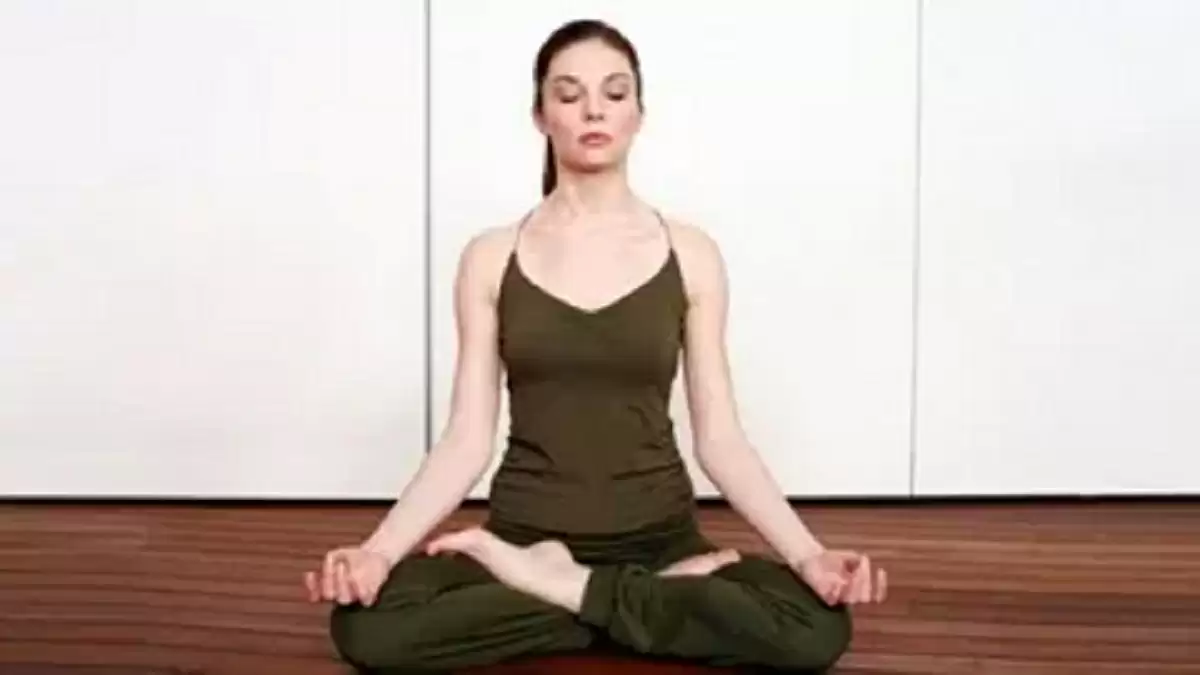
Padmasana is one of the most basic and beneficial asanas in yoga, and it has long been beneficial to humans. It has numerous advantages, including straightening the spine, opening up the hips, reducing anxiety, and much more.
What is Padmasana?
Padmasana is derived from two Sanskrit words: ‘padma,’ which means ‘lotus,’ and ‘asana,’ which means ‘posture.’ Padmasana is also known as Lotus Pose in English. Because it is believed that practising padmasana leads to the development of consciousness and mind, it is figuratively compared to a lotus flower.
Read also- The best yoga poses for elderly people
Padmasana helps you relax by linking your body, mind, and soul. It also helps you create unity by integrating your body, mind, and soul.
Padmasana is used in many different religions and traditions, including Jainism, Buddhism, Hinduism, and Tantra. As a meditation stance, it is widely used. In Tibetan Buddhism and Chinese, Padmasana is known as ‘Vajra.’ Padmasana is frequently visited by Lord Buddha, Shiva, and Tirthankaras.
How to do Padmasana?
Padmasana is simple on the surface, yet it takes a lot of practice and flexibility to master. It is the most comfortable asana once that flexibility is achieved, which is why it is usually employed for meditation.
- You must be seated in order to perform this asana.
- Your back should be in an erect position while sitting, and your legs should be spread out.
- The following step is to bend your right knee and bring your right foot closer to your left thigh with the support of your hands, finally placing it on your left hip crease.
- That leg’s sole should be pointing in your direction. Place your left foot on top of the right hip crease to cross your legs in the same manner.
- Once you’ve acquired this position, gently place your hands on your knees, producing a mudra with your fingers, or clasp your hands together and keep them towards your chest, forming a namaskar mudra.
Read also- A 15 minute Yoga routine for workaholics
It is essential to maintain an erect spine and a straight head while sitting in this position. After settling into a Padmasana, the next step is to practise breathing. Take a few deep breaths in and hold them for a few minutes before exhaling. Along with your breathing, concentrate on your entire body, as if you were becoming more aware of yourself.
