
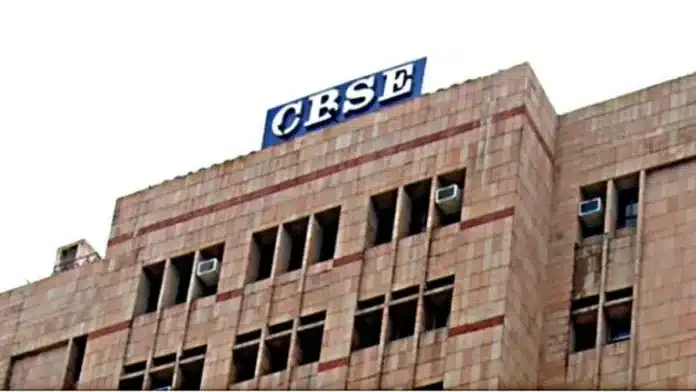
The Central Board of Secondary Education (CBSE) has made the third language a mandatory qualifying subject for students in Classes 9 and 10 under the National Education Policy (NEP) 2020.
The new rule will apply to students entering Class 9 in the 2026-27 academic session and Class 10 in 2027-28.
The third language will not be included in the Class 10 Board examination. However, students must pass the school-based internal assessment in the subject to receive their Class 10 pass certificate.
According to a CBSE circular issued on July 10, the third language is referred to as R3. Students entering Class 10 from the 2027-28 academic year will have to clear the R3 assessment to pass the Secondary School Examination.
What Happens If a Class 10 Student Fails the Third Language?
If a student fails the third language internal assessment in Class 10, the school will conduct another assessment before the final Board results are announced.
Students must clear this assessment to receive their Class 10 pass certificate, even though the subject will not be part of the Board examination.
Class 9 Students Will Still Be Promoted
CBSE has also clarified the rule for Class 9 students. If a student fails the third language assessment in Class 9, they will still be promoted to Class 10.
However, the student will have to clear the pending Class 9 language assessment while studying in Class 10.
This means students will not be held back in Class 9, but they must complete the third language requirement before finishing secondary school.
Three-Language Formula to Begin From Class 6
The latest decision follows an earlier CBSE circular issued on June 29. Under the new framework, the three-language formula will be introduced from Class 6 starting in the 2026-27 academic session.
Students will study three languages, and at least two of them must be native to India.
Students in Classes 7, 8 and 9 who have already chosen a foreign language along with English can continue studying it. However, they will also have to study a third language native to India.
Earlier, students generally stopped studying the third language after Class 8. Under the new policy, the subject will continue in Class 9 from 2026-27 and Class 10 from 2027-28.
The current Class 10 batch appearing for the 2026-27 Board examinations will not be affected by the new rules.
CBSE Language Policy Faces Legal Challenge
The revised three-language policy has also reached the courts. A petition challenging CBSE’s circulars is currently under consideration.
The petitioners have asked the court to restore CBSE’s earlier position announced on April 9, which had effectively delayed the compulsory third language requirement for Class 9 until the 2029-30 academic session.
The Ministry of Education filed a nine-page counter-affidavit on July 13 defending the policy. The Centre said education is included in the Concurrent List of the Constitution, allowing both Union and State governments to implement the National Education Policy.
The government also said the three-language formula aims to promote multilingualism, protect Indian languages, support students’ cognitive development and encourage national integration and cultural diversity.
With the latest rule, passing the third language school assessment will become necessary for students to receive their Class 10 pass certificate from the 2027-28 academic session.
