
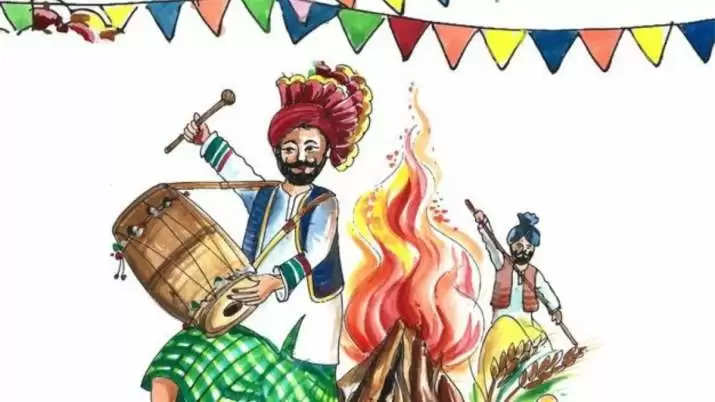

Makar Sankranti is one of the most prominent festivals in India, with celebrations taking place all around the country. Though the name of the holiday varies per area, the spirit of the celebrations stays the same. Lohri symbolises the conclusion of the winter solstice and the start of the season of longer days and shorter nights in Punjab. In addition, it is celebrated as the Rabi crop harvest holiday.
Read also- Happy Makar Sankranti 2021: Enjoy the Festival with These Tasty Dishes
This celebration is known by a different name in each region. Makar Sankranti, for example, is known as Maghi in Punjab and is preceded by Lohri. This is one among the many Indian festivities that follow the traditional solar calendar. As a result, it falls on the same date every year according to the Gregorian calendar that is on 13 January 13.
Significance of Lohri
The festival of Lohri marks the end of the cold winter months. As a result, they pay homage to the Sun God and pray for a plentiful harvest.
Read also- Jaipur Literature Festival rescheduled to March 5-14
If one of the popular theories surrounding the event is to be believed, Lohri is derived from the term ‘Loh,’ which means iron. According to experts, Lohri is named after Loi, the wife of social reformer Kabir Das.
Lohri songs commemorate the valour of a nobleman named Dulla Bhatti, who protected two girls named Sundri and Mundri from the Mughals, according to folklore. He then began to look after them as if they were his daughters.
Read also- Art & Design festival for teens
The Lohri bonfire is considered sacred in Hindu tradition. It is thought to represent fertility, good fortune, and auspiciousness. As a result, the first Lohri is noteworthy for newlyweds or newborns.
