
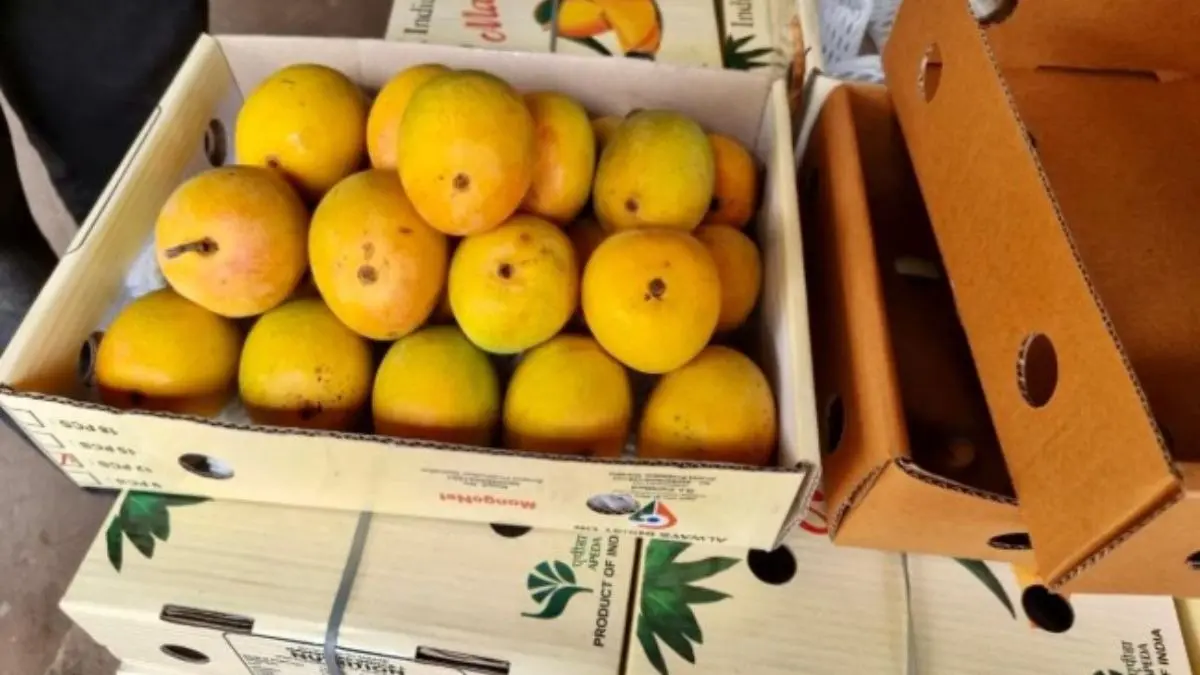
Japan has temporarily suspended mango imports from India after its quarantine officials found issues in pest-control procedures at some Indian export treatment centres.
The decision affects popular Indian mango varieties such as Alphonso Mango, Kesar Mango, Langra, and Banganapalli, which are regularly exported to Japan during the summer season.
According to reports, Japanese inspectors found irregularities at vapour heat treatment (VHT) facilities in India during inspections conducted earlier this year. These facilities are responsible for treating mangoes before export to ensure they are free from pests, especially fruit flies.
Japan follows strict plant health rules and has a zero-tolerance policy towards invasive pests that could harm its agriculture sector.
Following the inspection, Japanese authorities reportedly informed importers that mango shipments carrying inspection certificates issued after March 25, 2026, would not be accepted.
This is the first major restriction imposed by Japan on Indian mango imports in nearly two decades. A similar ban was imposed earlier over fruit fly concerns and was lifted in 2006 after India improved its treatment and certification systems.
Although Japan is not one of India’s largest mango export markets, the move is being seen as a setback for Indian agricultural exports.
The timing is also challenging for mango growers, especially in Maharashtra, where farmers have already suffered heavy crop losses due to extreme heat and erratic weather conditions this season.
India is the world’s largest producer of mangoes, with annual production of nearly 28 million metric tonnes, although most of the fruit is consumed within the country.
Indian authorities and exporters are expected to hold discussions with Japanese regulators to address the concerns and restore exports as soon as possible.
So far, neither Indian nor Japanese officials have publicly disclosed the exact technical issues found during the inspections.
