
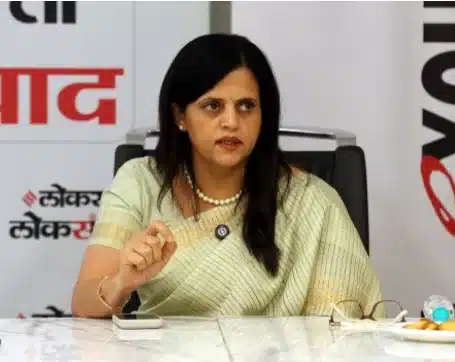
The Supreme Court has ordered the withholding of the salary of Brihanmumbai Municipal Corporation (BMC) Commissioner Ashwini Bhide and her personal staff, while issuing her a show-cause notice over the civic body’s failure to remove encroachments from land earmarked for a BEST bus station in Mumbai’s Borivali.
A three-judge bench comprising Chief Justice of India Surya Kant and Justices Joymalya Bagchi and V Mohana on Tuesday also rejected the BMC’s request for another 30 days to comply with its earlier directions and imposed costs of Rs 5 lakh on the civic body.
The court said it was prima facie satisfied that there had been wilful disobedience of its time-bound orders and sought an explanation from the Commissioner on why contempt action should not be taken against her.
Salary Withheld Until Court Directions Are Complied With
During the hearing, Justice Bagchi made it clear that the Commissioner would have to ensure compliance before seeking restoration of her salary.
“You will not be drawing a salary till the 1st of December 2026. So comply before that,” Justice Bagchi said during the proceedings.
The court restrained the BMC and the Maharashtra government from releasing the Commissioner’s monthly salary and that of her personal staff while the contempt proceedings remain pending.
The order marks a sharp escalation in the court’s response to what it described as continued non-compliance with earlier directions.
Supreme Court Refuses Another 30-Day Extension
The BMC had sought an additional 30 days to complete the process of removing the occupants from the land.
The bench rejected the request, saying no further extension would be granted.
Chief Justice Surya Kant said the civic authorities should complete the necessary proceedings even if officials had to work late to pass the required orders.
The court noted that its directions had already provided the municipal corporation adequate time to act.
Court Questions Possible ‘Connivance’ With Encroachers
The bench also made strong oral observations about the conduct of civic officials and questioned whether delays were linked to officials acting in concert with the encroachers.
The Chief Justice described the situation as a deliberate breach of the Supreme Court’s directions and warned that serious consequences could follow if officials continued to disregard its orders.
However, these were observations made during the hearing; any finding of contempt against the Commissioner will follow the show-cause process.
Marathi Translation Explanation Draws Court’s Ire
The court also took exception to the BMC’s explanation that documents produced by occupants before a civil court were in Marathi and needed to be translated into English before further action could be taken.
Justice Bagchi referred to an affidavit filed by an officer named Dr Tambe and questioned whether municipal officials in Maharashtra were genuinely unable to understand Marathi.
The bench was not persuaded that the translation issue justified further delay in complying with its directions.
What Is the Borivali BEST Bus Station Dispute?
The dispute concerns approximately 3,400 square metres of land, including a 200-square-metre administrative building, earmarked for public use as a BEST bus station in Borivali.
The BMC and a private developer had been involved in prolonged litigation over possession and development of the property.
On August 13, 2025, the Supreme Court directed the developer to hand over vacant and peaceful possession of the 3,400-square-metre area, including the administrative block, to the municipal corporation within eight weeks.
The court also ordered the BMC to immediately take over the project and make the bus station functional as early as possible, and in any case within three months from the date of taking possession.
At the same time, the BMC was directed to continue its efforts to remove encroachments in and around the land in accordance with law.
Supreme Court Had Flagged Inaction in November 2025
When the matter returned to the Supreme Court on November 13, 2025, the bench expressed dissatisfaction with the civic body’s progress in removing unauthorised occupants.
The Commissioner was then asked to file a personal affidavit providing details including the identities of occupants, notices issued to them, their responses and documents relied upon by them to claim tenancy or ownership.
The court also wanted information about steps taken by the municipal authorities to verify those claims.
Fresh Three-Month Deadline Issued in July 2026
The dispute came before the Supreme Court again on July 28, 2026.
The BMC told the court that notices had been issued against encroachers under the Maharashtra Regional and Town Planning Act, 1966, but several occupants had approached a civil court.
The Supreme Court observed that, in the absence of any interim stay from the civil court, there was nothing preventing the municipal corporation from taking those notices to their “logical conclusion”.
It consequently directed the BMC to complete the exercise within three months and file a compliance report.
That deadline expired without the encroachments being fully removed, leading to the latest proceedings.
Rs 5 Lakh Cost Imposed on BMC
Apart from declining further time and withholding salary payments, the Supreme Court imposed Rs 5 lakh in costs on the BMC.
The latest order reflects the bench’s dissatisfaction with the civic body’s repeated requests for additional time despite earlier deadlines.
The show-cause notice now requires Bhide, who has served as Mumbai’s Municipal Commissioner since March 2026, to explain why contempt action should not be taken against her. BMC’s own official records list Ashwini Satish Bhide as the current Municipal Commissioner.
Compliance Before December 1 in Focus
The immediate focus will now be on whether the BMC completes the eviction and encroachment-removal process before the matter returns to the Supreme Court.
The bench’s oral remarks indicate that compliance before December 1 will be particularly significant for the question of salary release.
At the same time, the show-cause proceedings will determine whether the court ultimately holds the Commissioner in contempt for non-compliance with its earlier orders.
