
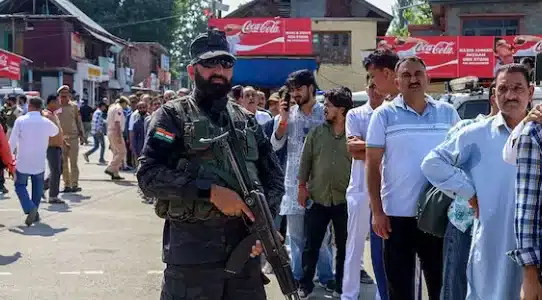
Fresh threats allegedly issued by the Lashkar-e-Taiba-linked United Liberation Council (ULC/ULF) have raised renewed security concerns among Kashmiri Pandit employees working in Jammu and Kashmir, with private phone numbers, home addresses and vehicle registration details reportedly leaked online.
The latest warning, which follows at least five such threats in just over a month, has allegedly asked Kashmiri Pandit employees working under the Prime Minister’s Package to quit their jobs or face fatal consequences.
Nearly 7,000 Kashmiri Pandit employees have reportedly been named in the latest threat.
A Mumbai-based Kashmiri Pandit with family in Srinagar compared the present intimidation with the threats faced by the community during the 1990s.
“This was their modus operandi even in the 1990s, except there was no internet. They had lists typed out and stuck on walls,” the person said.
Community Members Raise Security Concerns
India Today Digital contacted the Kashmiri Pandits Association (KPA), All India Kashmiri Samaj (AIKS) and several Kashmiri Pandits living in Mumbai and Delhi who have relatives in the Valley.
Officials from KPA and AIKS declined to comment. However, members of the community said such threats had become more frequent in recent times.
“My family is not among the government employees. We are a business family, and the threat is directed at government employees this time. But that doesn’t discount the fact that it is not safe for Kashmiri Pandits in Kashmir. These threats are pretty common in the valley,” a Kashmiri Pandit lawyer living in Delhi, who has family in Jammu, said.
Alleged Leak of Personal Details Sparks Alarm
In a September 7 post on X, community voice Saba Kaul described the development as a “massive and alarming security crisis”.
Kaul alleged that the ULC had issued a direct threat to Kashmiri Pandit PM Package employees and that private phone numbers, residential addresses and vehicle registration details had been leaked online.
She urged the Union Home Ministry and the office of Jammu and Kashmir Lieutenant Governor Manoj Sinha to investigate what she described as a “catastrophic data breach” and ensure security for employees working in the Valley.
PM Package Employee Seeks FIR
Concerns were also raised by Rakesh Handoo, who claims to be a PM Package employee and an activist associated with the All PM Package Employees Association in Kashmir Valley.
In a complaint dated September 6 and addressed to Prime Minister Narendra Modi, Lieutenant Governor Manoj Sinha and the Jammu and Kashmir Police Cyber Crime Wing, Handoo sought registration of an FIR over a September 5 threat letter attributed to the ULC.
According to Handoo, the letter threatened non-local employees and warned that they could be targeted irrespective of gender or status.
He also cited a threatening line from the letter stating that “body bags will be sent to their native places”.
Threat Letters Circulated Through Online Platforms
A senior journalist based in Srinagar confirmed that the threat letters were first released on the dark web before being circulated through WhatsApp and Telegram.
The September 1 communication was reportedly the fifth such threat issued against Kashmiri Pandits within a month.
That letter claimed the administration was considering providing light weapons to migrant Pandit employees following a security meeting chaired by Lieutenant Governor Manoj Sinha.
The latest controversy follows another threat letter dated August 7, in which the ULC claimed to possess information about Kashmiri Pandit officials, their families, locations and workplaces.
The group also allegedly warned that employees could be targeted even if they shifted to Jammu.
The August letter specifically named six government employees, though their details were not published.
Panun Kashmir, an organisation representing displaced Kashmiri Pandits, called for an immediate threat assessment for those named and their families.
Its convenor Agnishekhar said the publication of personal details alongside threats was a matter of “grave concern”.
PM Package Was Introduced to Support Return of Kashmiri Migrants
The PM Package employment programme for Kashmiri migrants dates back to 2008, when the Centre announced a return and rehabilitation package that included 3,000 state government jobs funded by the central government.
In November 2015, another 3,000 state government posts were approved under the Prime Minister’s Development Package.
This took the total number of centrally funded posts under the two schemes to 6,000.
According to Handoo, around 6,000 PM Package employees have been serving in the Kashmir Valley for nearly 15 years, with many living in rented accommodation.
He claimed that although 6,042 residential quarters had been constructed at Zewan in Srinagar and Mattan and Veerinag in Anantnag, only around 800 had been allotted over the past three years.
Handoo has called for an immediate security audit of transit colonies and rented accommodation, an investigation into the origin of the threats and a policy guaranteeing the “Right to Return and Rehabilitation” with job security and land rights.
Questions Raised Over Safety of Transit Accommodation
In another September 7 post, Handoo shared photographs which he identified as transit accommodation for minority PM Package employees at Noa on Chowgam Road in Kulgam.
He alleged that some of the housing was located in isolated and vulnerable areas and lacked adequate roads, drainage, fencing and security.
He also claimed that some accommodation remained incomplete.
“For whom is this normalcy?” Handoo asked, arguing that for an employee facing threats, normalcy would mean having a safe home, secure colony and completed accommodation.
Political Divide Over Threats
The issue has also triggered political differences over how the threats should be interpreted.
National Conference chief Farooq Abdullah questioned why Kashmiri Pandit employees were receiving threats while senior Hindu officers serving in Jammu and Kashmir were not.
He alleged that the threats could be part of a “conspiracy by the Lieutenant Governor-led administration to create fear and delay the restoration of statehood”.
The BJP strongly rejected the allegation.
BJP National Media Co-Incharge Pradeep Bhandari accused Abdullah of showing “soft support” for terrorists and said his remarks trivialised the suffering of Kashmiri Hindus.
Jammu and Kashmir Chief Minister Omar Abdullah, however, took a different position.
After the first threat emerged in August, Omar said targeted killings of minorities had taken place in the past and warned that the latest threat should not be taken lightly.
He called for action against those responsible and adequate security for Kashmiri Pandit employees.
After the second threat letter, Omar again said security and intelligence agencies needed to determine the source of the threats.
2022 Killing Remains a Reminder of Security Risks
Kashmiri Pandits were forced to leave the Valley in large numbers during the rise of armed insurgency in the late 1980s and early 1990s, amid targeted killings, threats and intimidation.
Many families subsequently settled in Jammu and other parts of the country after leaving behind their homes and properties.
The PM Package was introduced as part of efforts to encourage the community’s return through government employment and rehabilitation.
However, the killing of Rahul Bhat inside the Tehsil Office in Chadoora in 2022 remains a stark reminder of the security risks faced by Kashmiri Pandits working in the Valley.
The latest series of threats has once again brought the safety of PM Package employees and the broader rehabilitation process under focus.
