
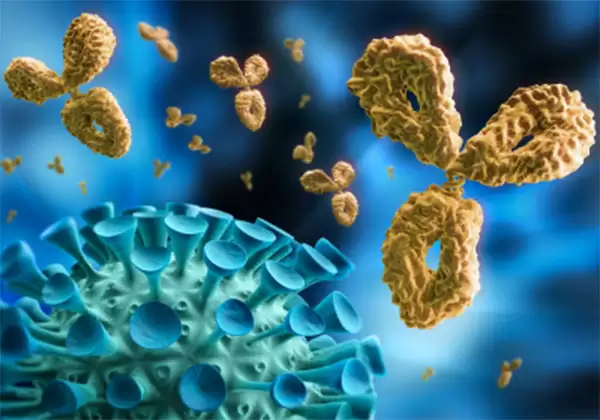
Researchers announced Friday that they have discovered an enzyme that helps COVID-19 enter cells in the human body, allowing the infection to grow.
Called non-structural protein 16, or nsp16, the enzyme is produced by the new coronavirus and acts as a “camouflage,” tricking human cells into thinking that the virus is “part of its own code and not foreign,” the scientists said in an article published Friday by the journal Nature Communications.
The hope is that the enzyme will provide a target for antiviral drugs designed to cure COVID-19, they said.
Co-author Yogesh Gupta told,”Our work not only enhances basic understanding of this particular pathway, but it provides an opportunity to develop novel antivirals against COVID-19 and emerging coronaviral illnesses in future”.
These drugs would “block the growth” of the coronavirus in the human body, said Gupta, an assistant professor of biochemistry and structural biology at the University of Texas Health Science Center at San Antonio.
COVID-19 uses nsp16 to disguise its RNA so that human cells can’t distinguish the virus’s RNA from its own — allowing the coronavirus to replicate and spread through the body, Gupta said.
