
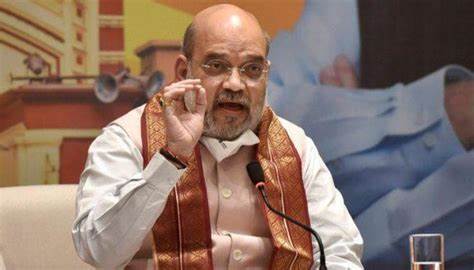
The proposed three laws, which would overhaul the nation’s criminal justice system, would guarantee that there is no “Traikh pe Tarikh” and help provide people with quicker access to justice, Home Minister Shah said in the Lok Sabha. In response to the bill debate, Shah stated that the existing Indian Penal Code (IPC), Indian Evidence Act, and Code of Criminal Procedure (CrPC) were products of colonialism and were designed to punish rather than provide justice. According to Shah, obtaining justice in the nation has been significantly hampered by budgetary and schedule constraints.
Everyone keeps putting the blame on each other, he said, and this is not delivered in a timely manner. Tarikh pe Tarikh milti hain (prolonged trial): police blame courts and government; courts blame police.
‘For the poor, the biggest challenge to getting justice is finance. Now we have created many things perfectly in the new laws. There will be no lingering on,” he stated.
The three bills aim to bring about comprehensive change to the criminal justice system with a human-centric approach and a focus on imparting justice instead of imposing penalties. They were later passed in the Lok Sabha to replace the criminal laws from the colonial era.
According to the Home Minister, the preliminary investigation must be completed within 14 days, and a formal complaint must be filed within three days of receipt.
The filing of the charge sheet cannot be postponed for longer than 180 days, and special permission from the court will be required even if the investigation is still ongoing. The inquiry report must be turned in to the magistrate within 24 hours.
The visit of an FSL team will be required in cases of offenses where the punishment is more than seven years he said. The judges will not be allowed to withhold judgment for longer than 45 days.
The accused now has seven days to submit an acquittal plea. The case will go to trial in a maximum of 120 days after the judge holds the hearing during those seven days. Plea bargaining had no time limit in the past. Now, the penalty would be less if the offender admitted to the crime within 30 days of the offense. The ability to present documents during a trial was nonexistent. It is now required that all documents be submitted within 30 days. There will be no delays in that, Shah continues. The minister said that there has also been the introduction of a “trial in absence” provision.
The accused have taken refuge in Pakistan, and their trial has not taken place. They are no longer required to be in this country, and if they do not appear before the court within 90 days, the trial will be held in their absence. He mentioned a number of cases, including the bomb blasts in Mumbai that rocked the country.
Shah claims that extensive consultations went into the drafting of the Bharatiya Nyaya (Second) Sanhita, Bharatiya Nagarik Suraksha (Second) Sanhita, and Bharatiya Sakshya (Second) Bill, all of which were approved by voice vote. Before sending the draft laws to the House for approval, he claimed to have gone over each comma and full stop.
