
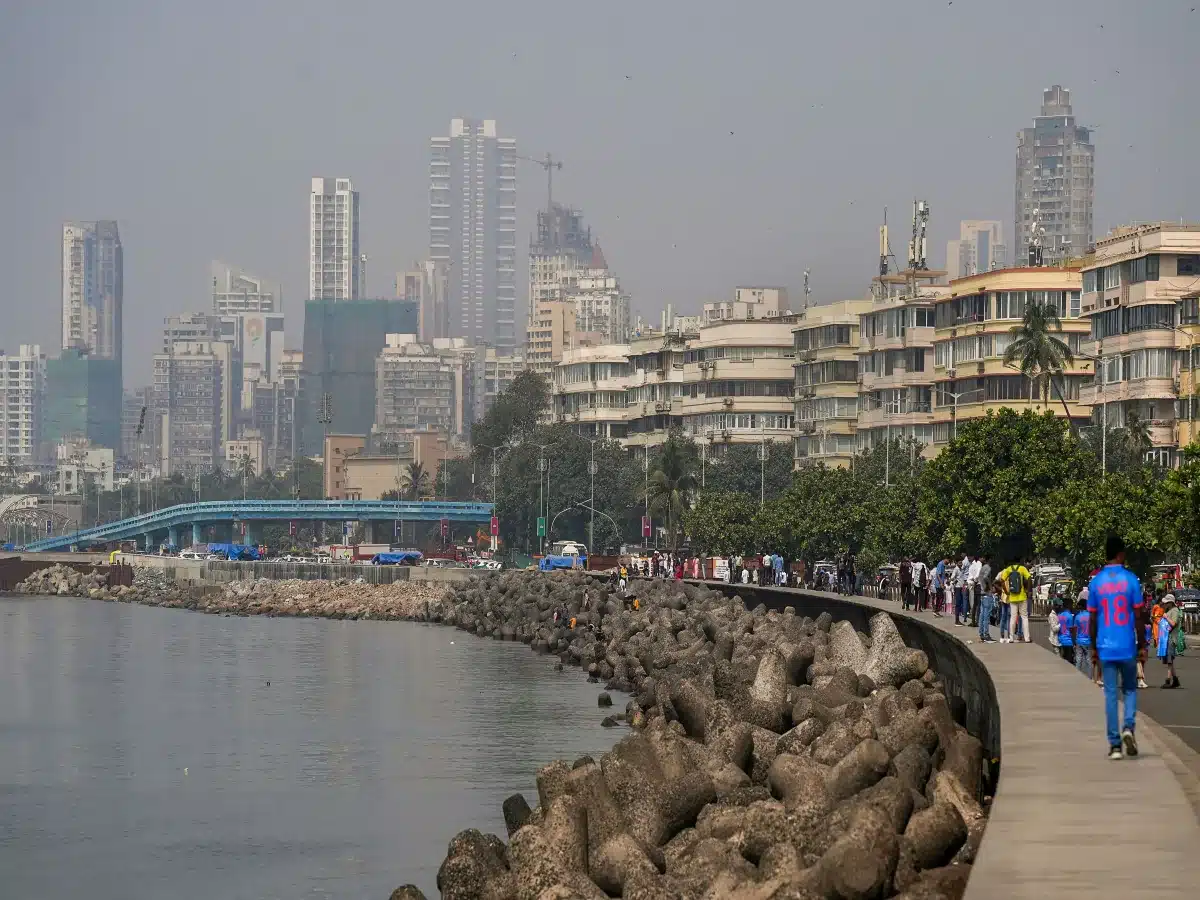
Mumbai’s growing water shortage has once again highlighted one of the city’s biggest challenges. While property prices continue to rise and redevelopment projects are expanding, experts say water availability could become a major concern for the city’s future growth.
The issue gained attention after the Brihanmumbai Municipal Corporation (BMC) imposed a 10% water cut due to low water levels in the seven lakes that supply drinking water to Mumbai. The civic body also extended restrictions on some non-essential uses, including construction activities.
Despite these curbs, real estate developers say ongoing projects are unlikely to face major problems in the short term.
Most builders do not depend heavily on BMC’s drinking water supply for construction. Instead, they use treated sewage water, recycled water and water tankers supplied by authorised vendors. Because of this, daily construction work has largely remained unaffected.
However, developers warn that if water restrictions continue for a long time, construction costs could increase and project completion timelines may slow down, especially for smaller developers.
Amit Jain, Chairman and Managing Director of Arkade Developers, said many companies have already adopted water-saving techniques and alternative sources to reduce the impact of shortages. But prolonged restrictions could eventually affect project costs and delivery schedules.
Anuj Mehta, Director of Dhuleva Group, said Mumbai’s large developers are prepared with backup arrangements, and the immediate impact on the sector is expected to remain manageable.
The concern comes at a time when Mumbai’s demand for water continues to rise due to rapid urbanisation and large-scale redevelopment.
According to BMC data, the city’s seven reservoirs currently hold 9.34% of their total capacity. Mumbai receives about 3,800 million litres of water every day, while the city’s daily demand has crossed 4,200 million litres.
Municipal Commissioner Ashwini Bhide recently said Mumbai has enough drinking water supply until August 17. She also stated that the impact on the real estate sector is expected to be minimal as most construction projects rely on alternative water sources.
Meanwhile, there may be some relief ahead. The India Meteorological Department (IMD) has issued a yellow alert for Mumbai and predicted that the monsoon is likely to reach the city around June 23.
Experts say the current situation is a reminder that Mumbai’s infrastructure must grow alongside its real estate sector.
Water resources expert Madhav Chitale said the challenge is not just about rainfall but also about storage, conservation and wastewater management. He stressed that Mumbai will need stronger water infrastructure, better rainwater harvesting systems and improved recycling facilities to meet rising demand in the future.
To tackle recurring shortages, the BMC is also working on a desalination project at Manori with Israel-based company IDE Technologies. The plant will initially produce 200 million litres of drinking water per day, with the capacity to increase to 400 million litres.
In addition, the Gargai and Pinjal dam projects are expected to add more than 1,300 million litres of water per day to Mumbai’s supply in the coming years.
While the current water cuts are unlikely to disrupt construction immediately, experts believe the issue has highlighted a larger question whether Mumbai’s infrastructure can keep pace with its rapidly growing real estate market.
