
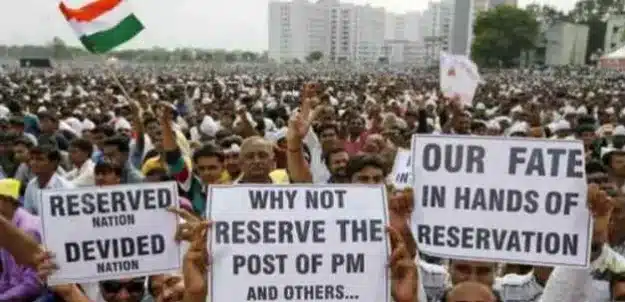
A growing anti-reservation movement is gaining attention across India. What started as online discussions is now turning into protests in several states. Supporters are demanding changes to the current reservation system, saying it should be based on economic status instead of caste.
One of the prominent faces of the movement is Harsh Dubey, who became popular after speaking during a TV debate on the NEET paper leak. Since then, he has gained thousands of followers on social media and is waiting for permission to hold a protest at Delhi’s Jantar Mantar.
Another major platform is the Reservation Hatao Andolan (RHA). The campaign has gained millions of followers on Instagram and recently held its first public protest in Nagpur, Maharashtra. The movement says it wants to start a nationwide discussion on reservation reforms.
In the past few days, protests have also been reported in Nagpur, Lucknow, Jaipur and Visakhapatnam. In Jaipur, members of the Shri Rajput Karni Sena clashed with police during a protest over the UGC’s caste equity regulations. The group has also warned of more protests if its demands are not met.
The RHA has proposed replacing caste-based reservation with income-based reservation. It has also suggested one-time reservation benefits for each family, minimum qualifying marks for all categories, periodic review of reservation policies and a gradual phase-out of reservations as educational inequality reduces. The group says its current focus is on creating public discussion rather than launching large-scale protests.
The movement has received support from some public figures, while others continue to support the existing reservation system. Union Minister Ramdas Athawale has strongly opposed the campaign, saying that reservation rights are protected by the Constitution and cannot be taken away.
Political parties have largely avoided taking a clear stand on the issue. With important state elections scheduled in 2027, the growing debate over reservation could become a major political issue in the coming months. Whether the movement remains an online campaign or grows into a nationwide protest will depend on its leadership, public support and future developments.
