
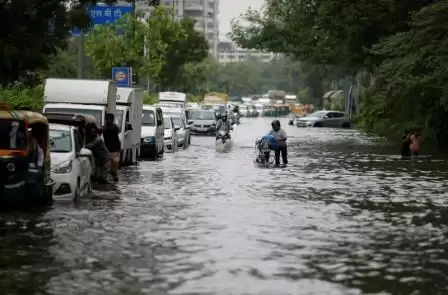

According to a United Nations body, climate-related disasters, such as floods and heatwaves, have grown fivefold in the last 50 years, killing more than 2 million people and costing $3.64 trillion in total damages. The World Meteorological Organization (WMO) claims that their “Atlas” is the most thorough examination of death and economic losses caused by weather, water, and climate extremes ever published.
It looks at 11,000 events between 1979 and 2019, including notable disasters like Ethiopia’s 1983 drought, which was the single most deadly occurrence with 300,000 deaths, and Hurricane Katrina in 2005, which was the costliest with $163.61 billion in losses. According to the research, the number of catastrophes increased roughly fivefold from the 1970s to the most recent decade, adding to evidence that extreme weather events are becoming more frequent as a result of global warming.
Read also: MoS Home warns of grave impacts of climate change
Climate change and improved catastrophe reporting, according to the WMO, are both contributing to the increase in frequency. When hurricanes like Harvey, Maria, and Irma ravaged the United States in the 2010s, costs soared from $175.4 billion in the 1970s to $1.38 trillion in the 2010s. In a prologue, WMO Secretary-General Petteri Taalas stated, “Economic losses are rising as exposure grows.”
Even though risks were more expensive and ordinary, the yearly mortality toll has dropped from over 50,000 in the 1970s to approximately 18,000 in the 2010s, indicating that more significant planning was paying off. Taalas stated, “Improved multi-hazard early warning systems have resulted in a considerable reduction in mortality.”
Read also: 1bn kids live in extremely high-risk countries of climate impacts: Unicef
The World Meteorological Organization (WMO) believes that the study, which includes a thorough geographical breakdown, can assist countries in developing policies to safeguard people better. According to the report, developing nations accounted for more than 91 per cent of the 2 million deaths, with just half of the WMO’s 193 members having multi-hazard early warning systems. It also said that “significant gaps” in meteorological measurements, particularly in Africa, jeopardised early warning system accuracy.
