
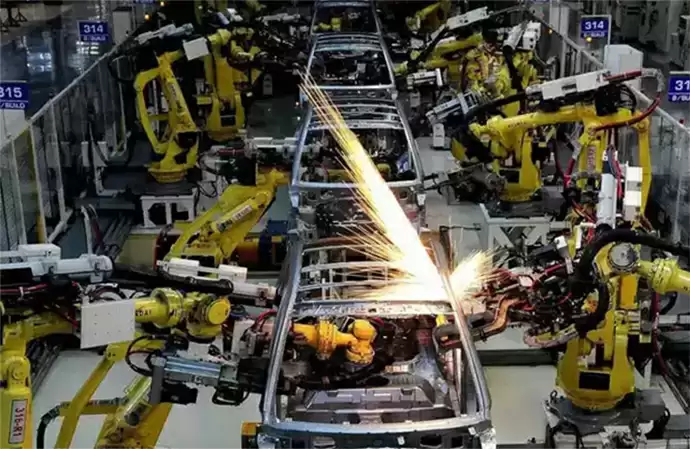

New Delhi:The third phase lockdown ends on May 17. There is a doubt as to whether the lockdown period will be extended after 17 May. But it is certain that after May 17, manufacturing industries will start working. The Ministry of Home Affairs has issued guidelines in this regard on Sunday. The Ministry has issued guidelines saying that manufacturing units should ensure all safety and protocol while restarting, do not attempt rapid production in the competition of profit. The ministry said that it should be treated as a trial run, further planning will be prepared after the first week’s assessment. The Ministry of Home Affairs has set several guidelines related to safety in the guidelines issued for different factories.
“When Lockout/Tagout procedures are not in place, many energy sources can prove to be hazardous to operators/supervisors who are servicing or maintaining electrical, mechanical or chemical equipment. When heavy machinery and equipment are not maintained periodically, they can become dangerous for the operators/engineers,” NDMA said in a statement.
Generic Guidelines
While restarting the unit, consider the first week as the trial or test run period; ensure all safety protocols; and not try to achieve high production targets.
To minimize the risk it is important that employees who work on specific equipment are sensitized and made aware of the need to identify abnormalities like strange sounds or smell, exposed wires, vibrations, leaks, smoke, abnormal wobbling, irregular grinding or other potentially hazardous signs which indicate the need for immediate maintenance or if required shutdown.
Especially during the Covid-19 times, ensure all lockout and tag out procedures are in place on a daily basis (not applicable for units running 24hrs).
Inspection of all equipment as per the safety protocols during the restart phase
In case the industry has any difficulty in managing crucial backward linkages that may be critical for their safe functioning, they should approach the local district administration for specific assistance. District Magistrates may be instructed to ensure that in such instances, the industrial unit may be facilitated to run their end to end operations, in the overall interests of industrial security.
For specific industrial processes
Storage of raw material
Inspect the storage facilities for any signs of spills, wear and tear during the lockdown.
Check for already opened storage vessels/containers/bags/silos for possible oxidation/chemical reaction/ rusting/ rotting etc.
HAZMAT Chemicals in the storage need to be checked for chemical stability before using for any processes
Ensure ventilation and proper lighting before entering the storage areas
Sense for abnormalities like strange sounds or smell, exposed wires, leaks and smoke
Check supply pipelines/valves/conveyor belts for any signs of damage/wear & tear
Check the storage building for any signs of distress and damage to the roof.
Manufacturing Processes
Carry out a complete SafetyAudit of the entire unit before taking up starting activities
Cleaning of pipelines, equipment and discharge lines: Mechanical cleaning followed by air /water flushing and chemical cleaning based on the type of the process equipment
Run-in of rotatory equipment under supervision
Boilers/ furnaces/ heat exchangers to be checked for lining and signs of wear and tear
Check supply pipelines/valves/conveyor belts for any residual material and wear and tear. Also check all the pipelines / valves for obstructions/ pressure levels.
Ensure all pressure, temperature gauges are functional
Tightness test:Many process units handle combustibles or toxic substances (or both), the leakage of which could result in disaster, damage, or economic loss. To prevent the occurrence of such incidents, it is necessary to confirm that the plant complies with the required tightness before start up.
Service test need to be performed for all water, compressed air, and steam piping and equipment with normal operating fluids. The system is first pressurized with operating fluids and then checked for leakage. For air lines, leaks can be found using soap solution. For water and condensate lines, the leakage can be observed visually. Leakage points found during the test are retightened. The test is deemed successful if no foam is observed from soap solution, or if no water or condensate is observed visually.
Vacuum hold test: All vacuum systems must be leak tested. Air inside the system is first evacuated to attain the required vacuum. The best way is to start at one end of the section and work through to the other end, checking flanges, valves, fittings, instruments, and other equipment. Each leak is tagged, making it easy for the maintenance team and personnel of the next shift to continue with the work.
Trial testing be carried out before the full-fledged production is initiated with full human resources
Ensure the arrangement for round-the-clock emergency crews/ professional technical teams provided with MAH and cluster of MAH should have an extended coverage of 200 km to reach transport accident spots for help
Storage of Products
Check the storage facilities / silos for any damage or wear and tear
Guidelines for Workers
Ensure 24 -hour sanitisation of the factory premises.
Factories need to maintain a sanitisation routine every two-three hours especially in the common areas that include lunch rooms and common tables which will have to be wiped clean with disinfectants after every single use.
For accommodation, sanitisation needs to be performed regularly to ensure worker safety and reduce spread of contamination.
Entrance health checks
Temperature checks of all employees to be done twice a day.
Workers showing symptoms should not report to work.
Provisions of hand sanitisers and mask to all employers.
Providing gloves, masks and hand sanitisers to be done at all factories and manufacturing units.
COVID 19 health and prevention staff education
Education on safety steps to take from entry to exit in the factory
Measures to take precautions at personal level
Quarantine measures for supply and storage of goods
Sterilise boxes and wrapping brought into factory premises
Isolate and sanitise finished goods as appropriate
Delivery of goods in shifts
Physical distancing measures
Create physical barriers to ensure the physical distance within the work floor and dining facilities
Provide face protection shields along with masks and PPEs.
Working in shifts
Factories that work 24 hours at full production capacity should consider one hour gap between shifts, except factories/plants requiring continuous operations. Managerial and administrative staff should work one shift at 33 per cent capacity as per MHA guidelines; but while deciding which particular person to be included in 33% at any given point of time, overriding priority should be given to personnel dealing with safety.
Ensure no sharing of tools or workstations to the extent possible. Provide additional sets of tools if needed.
Scenario plan on discovering a positive case
