
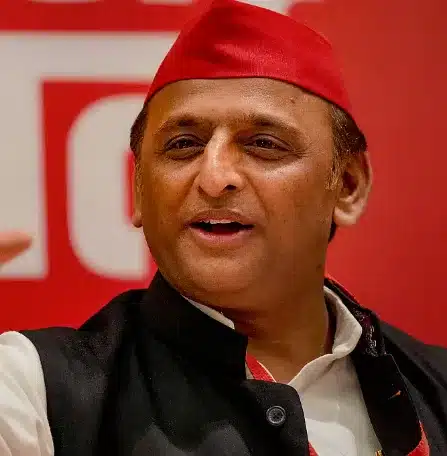
Akhilesh Yadav’s Samajwadi Party has registered a strong performance in the closely watched Uttar Pradesh Legislative Council elections, retaining the Varanasi Teachers’ constituency and establishing a decisive lead in the Varanasi Graduates’ seat.
The SP also secured the Agra Teachers’ constituency, while the Bharatiya Janata Party maintained the overall advantage across the state, winning several seats as counting continued for the 11 Legislative Council constituencies.
The results are being closely watched by both parties ahead of the 2027 Uttar Pradesh Assembly elections, although the electorate in graduates’ and teachers’ constituencies is significantly different from that in a general Assembly or Lok Sabha election.
SP Retains Varanasi Teachers’ Seat
In the Varanasi Teachers’ constituency, sitting SP MLC Lal Bihari Yadav retained his seat against BJP candidate Dr Pramod Kumar Mishra.
In the first-preference count, Yadav received 10,958 votes against Mishra’s 6,060, giving him a lead of 4,898 votes. Subsequent preference counting confirmed Yadav’s victory.
After the win, Yadav credited SP chief Akhilesh Yadav and said teachers had backed the party over issues concerning their profession and job security.
He also invoked former SP chief Mulayam Singh Yadav, popularly known among supporters as “Netaji”, saying both Mulayam and Akhilesh had maintained a strong connection with teachers.
Ashutosh Sinha Heads Towards Victory in Graduates’ Seat
The Samajwadi Party was also heading towards a major win in the Varanasi Graduates’ constituency, where its candidate Ashutosh Sinha had established a commanding advantage over BJP candidate Kedar Nath Singh.
As of the latest available update, the final declaration was still awaited, but Sinha was considered set for victory based on the counting trend.
A win would give the SP control of both the Teachers’ and Graduates’ seats in the Varanasi division.
The political significance is heightened by Varanasi’s association with Prime Minister Narendra Modi, who represents the Varanasi Lok Sabha constituency. However, the Legislative Council constituencies cover a much wider electorate and should not be treated as identical to Modi’s parliamentary seat.
SP Also Wins Agra Teachers’ Seat
The SP also made gains in the Agra Teachers’ constituency, where Dr Aakash Agarwal defeated the BJP challenge after establishing a substantial lead during preference counting.
Agarwal had won the same constituency as an Independent in 2020 before contesting this election on the SP ticket, meaning the party brought the seat formally into its fold rather than taking it directly from a BJP incumbent.
The Agra result added to the SP’s positive showing in the teacher constituencies.
BJP Maintains Overall Edge
Despite the SP’s high-profile gains, the BJP remained ahead in the overall contest.
The party secured the Meerut-Saharanpur Graduates’ and Teachers’ seats, the Bareilly-Moradabad Teachers’ constituency and the Lucknow Teachers’ seat, among others.
BJP’s Dinesh Kumar Goyal retained the Meerut-Saharanpur Graduates’ seat, while Shrichand Sharma retained the Teachers’ constituency. Hari Singh Dhillon won again from Bareilly-Moradabad Teachers’.
According to the latest counting update, the BJP had won five seats and was leading in another, giving it the overall numerical edge even as the SP celebrated its gains in Varanasi and Agra.
What Are Graduates’ and Teachers’ MLC Constituencies?
Unlike Assembly elections, not every registered voter can cast a ballot in these constituencies.
Under Article 171 of the Constitution, a portion of the members of a State Legislative Council is elected through specially constituted graduates’ and teachers’ electorates.
For a Graduates’ constituency, a person generally has to be ordinarily resident in the constituency and have held a recognised graduate degree or equivalent qualification for at least three years before the qualifying date.
For a Teachers’ constituency, the voter must ordinarily reside in the constituency and have taught for an aggregate of at least three years during the previous six years in eligible educational institutions of at least secondary-school standard.
These voters must separately register on the relevant Legislative Council electoral roll.
Why UP Has These Elections
Uttar Pradesh has a bicameral legislature consisting of the Legislative Assembly and the Legislative Council.
Under Article 171, roughly one-twelfth of Legislative Council members are elected by graduates and another one-twelfth by teachers. Other members are elected by MLAs and local bodies, while some are nominated by the Governor.
Voting in these MLC elections is conducted through ballot papers using the single transferable vote and preferential voting system, making counting considerably more time-consuming than in regular first-past-the-post elections.
SP Sees Varanasi Result as Political Boost
Samajwadi Party leaders have presented their performance in Varanasi as a morale booster ahead of next year’s Assembly election.
For Akhilesh Yadav, winning the Teachers’ constituency and being on course to take the Graduates’ seat provides the party with a politically valuable result in a region closely associated with the Prime Minister.
However, claims that the result demonstrates a wider shift among Uttar Pradesh voters remain political interpretations rather than conclusions that can be drawn from these elections alone.
Graduates’ and teachers’ constituencies have specialised, separately registered electorates and significantly lower voter bases than Assembly constituencies.
BJP Strong Across Other Regions
For the BJP, the loss in the Varanasi contests is a setback in a politically important region, but its wider performance across western and other parts of Uttar Pradesh remains strong.
The party successfully defended major seats in Meerut-Saharanpur and Bareilly-Moradabad and secured the Lucknow Teachers’ constituency.
The mixed outcome therefore gives both parties different political narratives: the SP can point to its gains in Varanasi and Agra, while the BJP can emphasise its larger statewide tally.
With the 2027 Assembly election approaching, both parties are likely to use the MLC results as an organisational and messaging test — but the specialised nature of the electorate means the results cannot by themselves be treated as a forecast of the Assembly contest.
