
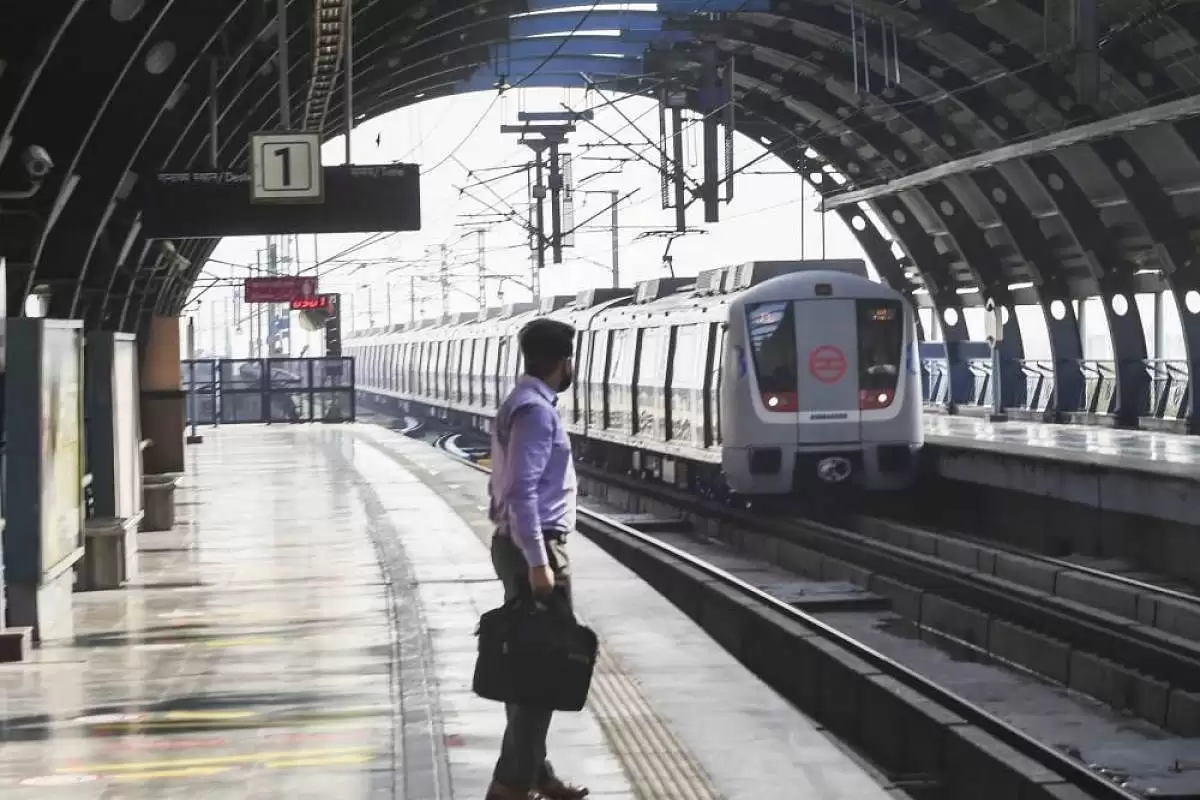
The Delhi High Court dismissed a plea on Tuesday contesting the authorities’ decision to allow 100% seating in the Delhi Metro and buses running in the national capital during the COVID-19 epidemic, stating it is up to the competent authorities to decide on public transportation legislation.
There would be no end to such petitions, a bench of Justices Vipin Sanghi and Jasmeet Singh observed, if any user of public transportation or citizen is allowed to raise such problems and dispute the government’s judgement. The Bench stated that it is a policy decision made by the responsible authorities after investigating the case and that the court cannot intervene.
Read also: Delhi Metro, DTC buses to operate at 100% capacity
The court stated that the appeal contesting a July 24 decision by the Delhi Disaster Management Authority (DDMA) of the Delhi government allowing 100 per cent seating capacity in the Delhi Metro, DTC, and cluster buses have no validity. It dismissed a petition brought by S B Tripathi, who utilised public transportation and argued that the government’s action infringed his fundamental right to life since the Delhi Metro and buses have such high seating capacity that he is at risk of acquiring COVID-19.
According to the petitioner, the same DDMA directive allows bars and restaurants to operate with 50% seating capacity, and the decision to allow 100 seats in public transportation is illogical. The Bench stated that the logic behind 50% seating capacity in bars and restaurants is that patrons are allowed to consume eatables, but this is not the situation in the Delhi metro and buses, where passengers must wear masks the whole time.
Read also: Delhi Metro will start again after 169 days tomorrow
The authorities have not allowed passengers to ride while standing to minimise overcrowding, adding that if the petitioner disagrees with the decision, he will not go by Metro. “It is for the competent authorities entrusted with administrative duty to make an educated decision on topics relating to public transportation legislation, as well as the opening and operation of markets, restaurants, pubs, and movie halls,” the Bench stated. The Bench went on to state, “Today, one petitioner proposes that metro and bus systems operate at 50% capacity; tomorrow, someone else will argue, “No, that’s too much; make it 30% or 20%.” This is not acceptable.”
