
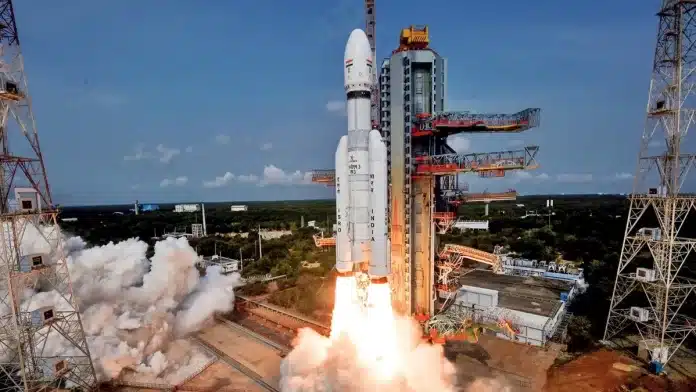
News Desk – India’s space agency, ISRO, achieved a major success on Christmas Eve by launching the heaviest foreign satellite ever sent into space from Indian soil. The mission was carried out smoothly using the powerful LVM3 rocket.
The LVM3-M6 mission lifted off from the Satish Dhawan Space Centre in Sriharikota at 8:54 am on December 24, 2025. The massive rocket, nicknamed “Bahubali” because of its size and strength, weighed about 640 tonnes at liftoff.
The rocket carried BlueBird Block-2, a 6.5-tonne communication satellite built by US-based company AST SpaceMobile. This launch marked ISRO’s 101st successful orbital mission and was conducted commercially through NewSpace India Limited (NSIL).
Millions of people watched the live launch as the three-stage rocket with two solid boosters, a liquid core, and a cryogenic upper stage placed the satellite perfectly into a low Earth orbit between 520 and 600 km.
ISRO’s chief praised the mission, calling it a proud moment for India. He said the rocket performed with great accuracy, placing the satellite almost exactly where planned, matching the best global standards.
The BlueBird Block-2 satellite is the largest commercial communication satellite in low Earth orbit so far. It is designed to send 4G and 5G signals directly to normal smartphones, without the need for mobile towers. This technology can help connect people in remote mountains, deserts, and oceans, bringing mobile coverage to places that currently have none.
AST SpaceMobile said the launch is a key step in building its satellite network and could compete with other global internet services. The company plans to work with more than 50 mobile operators worldwide.
The successful launch wrapped up a strong year for ISRO, following missions like Chandrayaan-3 and earlier commercial satellite launches. People gathered at viewing galleries cheered as the rocket lit up the night sky.
This mission further strengthens India’s position in the global space launch market and boosts confidence in ISRO’s heavy-lift rocket ahead of future missions, including the Gaganyaan human spaceflight programme.
With this achievement, India has once again shown its growing strength in space technology ending the year with a powerful and festive success.
