
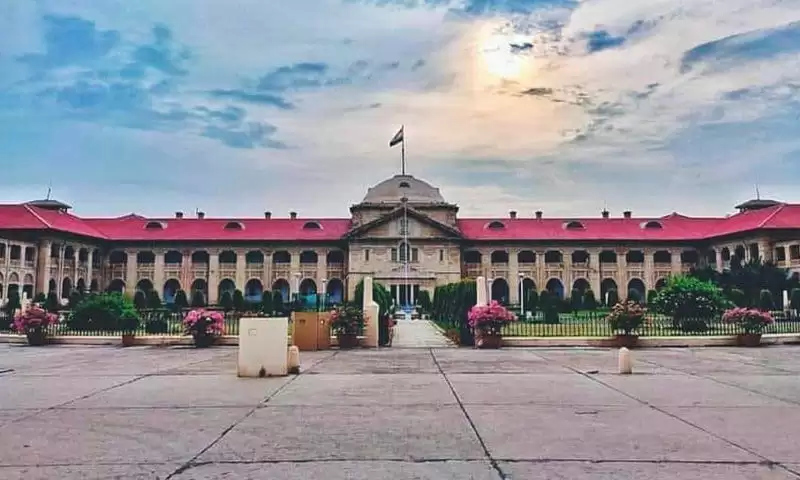
The Allahabad High Court has given the Uttar Pradesh government four weeks to respond to its request for funding of madrasas and other religious institutions. The court also inquired as to whether state support for madrasas and other religious institutions is consistent with the secular framework outlined in the Indian Constitution.
The High Court has inquired as to whether the madrasas that have been recognised and funded also allow female students, stating that the policy of providing financial aid to religious institutions is consistent with the Constitution’s secular system.
At the hearing of the written proceedings by Madrasa Anjuman Islamia Faizul Uloom, Justice Ajay Bhanot directed that within four weeks the State government file the counter affidavit and set October 6 as its next hearing.
Read also: Allahabad HC says no to beard for UP cop
The HC bench ordered the Yogi Adityanath administration to submit the syllabi/courses, conditions, and recognition criteria, including the necessity for playgrounds at madrasas and all other religious institutions recognised or assisted by the state government, to the court.
The court ordered the state government to provide the names and addresses of different additional boards of education with institutions that offer theological instruction to people of other religious sects in its affidavit.
Read also: Allahabad HC sets aside inclusion of 2 sub-castes in ST category
It also asked the UP government to respond on whether the state government’s policy of providing financial help to religious education institutions is consistent with the Constitution’s framework, particularly in light of the word “secular” in the Constitution’s Preamble.
The court inquired if other religious minorities get government support for theological schools, whether there is a restriction against women applying to religious institutions as students, and whether such a prohibition is an act of discrimination forbidden by the Constitution. In particular, the petitioner requested more teaching positions in light of the rising number of pupils.
