
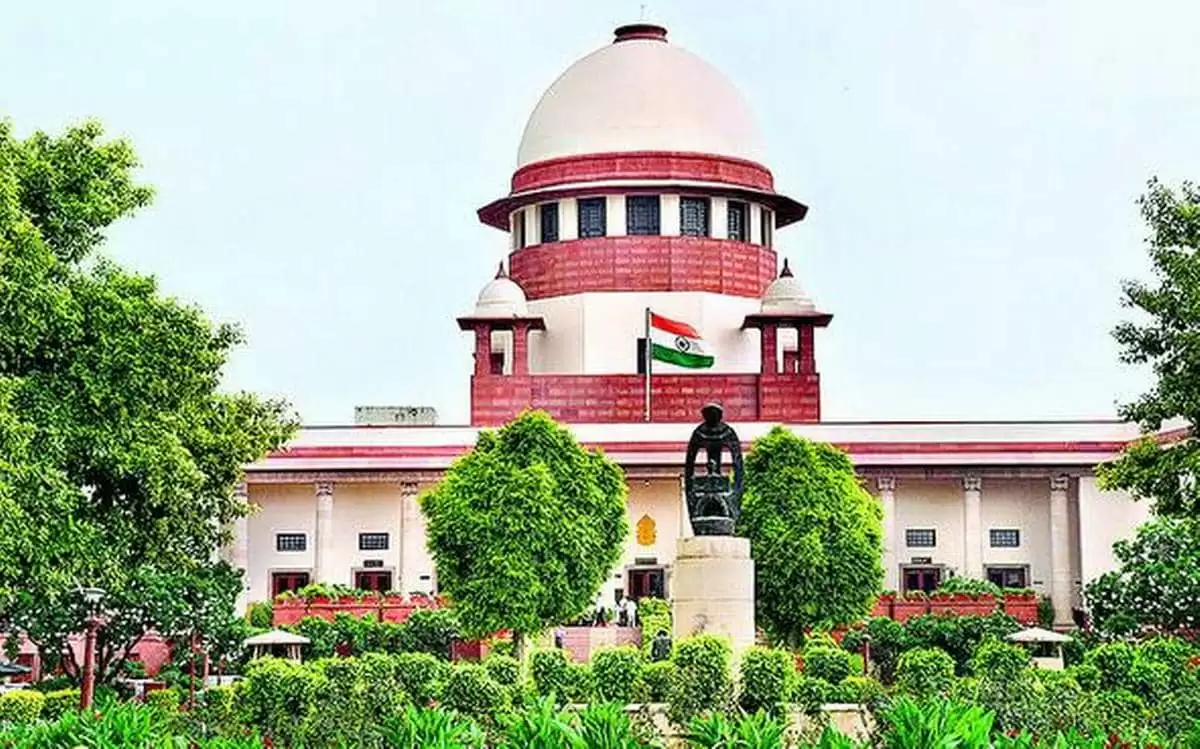
On Wednesday, the Supreme Court ordered states in the National Capital Region to implement air pollution management guidelines set by ‘The Commission for Air Quality Management in the National Capital Region and Adjoining Areas.’ Following the Centre’s assertion that the situation will improve by then, according to meteorological experts, the bench ruled that tougher measures would be made after November 21.
Read also: Supreme Court Judge Criticizes Level of Indian Education System
The Centre’s Solicitor General Tushar Mehta argued that meteorological experts had suggested that the situation improve until November 21 due to wind conditions and asked the court, “Can’t we wait till November 21 before implementing tougher measures?” During the hearing, Chief Justice of India NV Ramana stated that televised discussions pollute the environment much more. “Everyone has a goal in mind.
After the conference, it was decided that all industries in the NCR with gas connectivity should switch to gas immediately. It stated that the six power plants not permitted to run must stay shut down until at least November 30. According to the Secretary of the Ministry of Power, any load needs resulting from the shutdown would be met by supplying power from facilities located outside 300 kilometres. Regarding vehicular pollution, the Commission decided that the restriction on trucks entering the country be prolonged if required after November 21.
Authorities have been told that no petrol cars older than 15 years or diesel vehicles older than ten years can drive on NCR roads. It also urged the NCT government to ensure that there are enough CNG buses available. The Commission has ordered that all construction be paused, except for work on railways, metros, airports, bus terminals, and defence projects to reduce dust pollution. It has ordered authorities to deploy anti-smog guns, water sprinklers, fire tenders, and dust suppressants three times a day in all susceptible locations and increase the number of mechanized road sweepers.
Read also: Supreme Court Hits out at Centre Over Tribunals
Except for emergency services, the Commission requested the NCR states and the GNCTD implement the diesel generators ban firmly. It instructed NCR state governments to enable at least 50% of its employees in NCR offices to work from home until November 21, subject to further evaluation, and urge 50% of employees in private companies to do the same until November 21. It stated that until further instructions, all public and private schools, universities, and educational institutions in the NCR will stay closed, allowing only online education. According to the SG, this is a graded reaction that will be evaluated based on the circumstances.
