

New Delhi: In a research report, it has been estimated that the number of poor worldwide can increase to more than one billion. 39.5 million new people who are poor in the world due to the epidemic will be from South Asia. Poverty is expected to affect this region the most due to the epidemic.
King George College, London and the Australian National University have done this research in collaboration with the United Nations University World Institute for Development Economics Research. The paper published on the research says that poverty is expected to increase more in developing countries with middle income groups. There is going to be a huge change in the proportion of poor at the global level. According to the report, South Asia and East Asia can again become centers of poverty at the global level.
According to the report, for the poorest people in the world, economic loss in the form of loss of income can reach $ 500 million per day. The magnitude of poverty can also increase enormously. Globally, 39.5 million people will be new poor, with a 20 percent drop in income based on the poverty line of $ 1.90 minimum daily income. Half of these people will be in South Asia and East Asia including India. In Sub Saharan Africa, 30 percent, or 119 million new poor will be. India has been a major contributor to poverty.
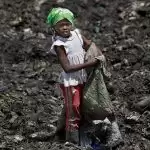
According to another report, millions of children may be forced to become child laborers due to the epidemic. Child labor is expected to grow the most in India, Brazil and Mexico. The progress made in the last 20 years towards eradication of child labor will disappear due to this epidemic. According to Covid-19 and the International Labor Organization (ILO) report on child labor, the number of child workers is going to increase for the first time in 20 years due to this crisis.
The report on Children’s Day states that children already working as child laborers may have to work longer, their working conditions may worsen or they may be made worse. This will affect their health and safety. Children are the most readily available workers in common households. Whenever the family needs more financial help, they send children to work.
