
Chennai: The companies source a key raw material from a tiny family-owned firm in the Austrian countryside and crank up assembly lines in the US and Belgium to produce the most-anticipated item of the year — a COVID-19 vaccine.
The BioNTech-Pfizer vaccine — incidentally first administered to a British nonagenarian after its approval in the UK — and the other coronavirus shots being developed in record time are being viewed as a perfect retort to detractors of globalisation, those who sounded the death knell for international commerce and cooperation at the height of the pandemic.
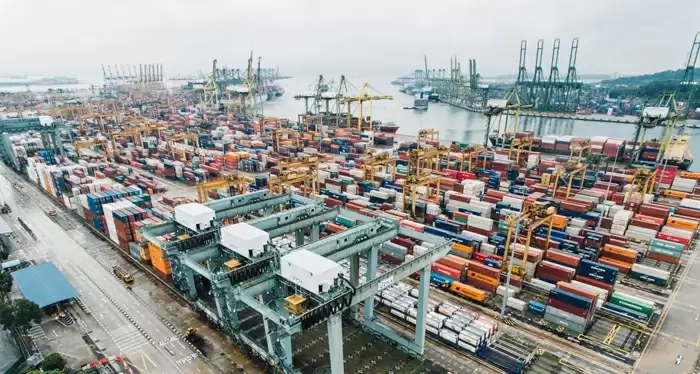
The coronavirus disrupted global supply chains, shuttering factories, emptying shelves in supermarkets and leaving countries clamouring for essential medical supplies. The crisis exposed the over-reliance of companies and governments on China-dominated global value and supply chains, even when it came to essentials such as medicines. Many predicted a permanent retreat for globalisation, predicting companies would move back production to their destination markets.
Months later, there are hardly any signs of so-called reshoring. On the contrary, global trade is witnessing a spectacular rebound, led by usual suspect China — the controversial poster child of globalisation. The world power is experiencing massive demand for its protective gear and work-from-home tech products. “There is a recognition that trade actually provides a very positive and helpful, efficient solution to the kind of challenges that these kinds of crises raise,” World Trade Organization (WTO) Chief Economist Robert Koopman told DW. “Countries recognise that having a diverse supply chain is a good thing and that being able to draw upon the capabilities and expertise of other countries and their resources can help you solve your problem.” The WTO expects global goods trade to drop by a little over 9% this year, followed by a rise of about 7% next year. In April, it had forecast a slump of as much as 32% for 2020. The sharp recovery means that the impact of the pandemic on trade compared to GDP has been much less severe than was seen during the global financial crisis of 2008-2009. Services trade, however, is expected to remain worse off, hurt by restrictions on travel and tourism.
