
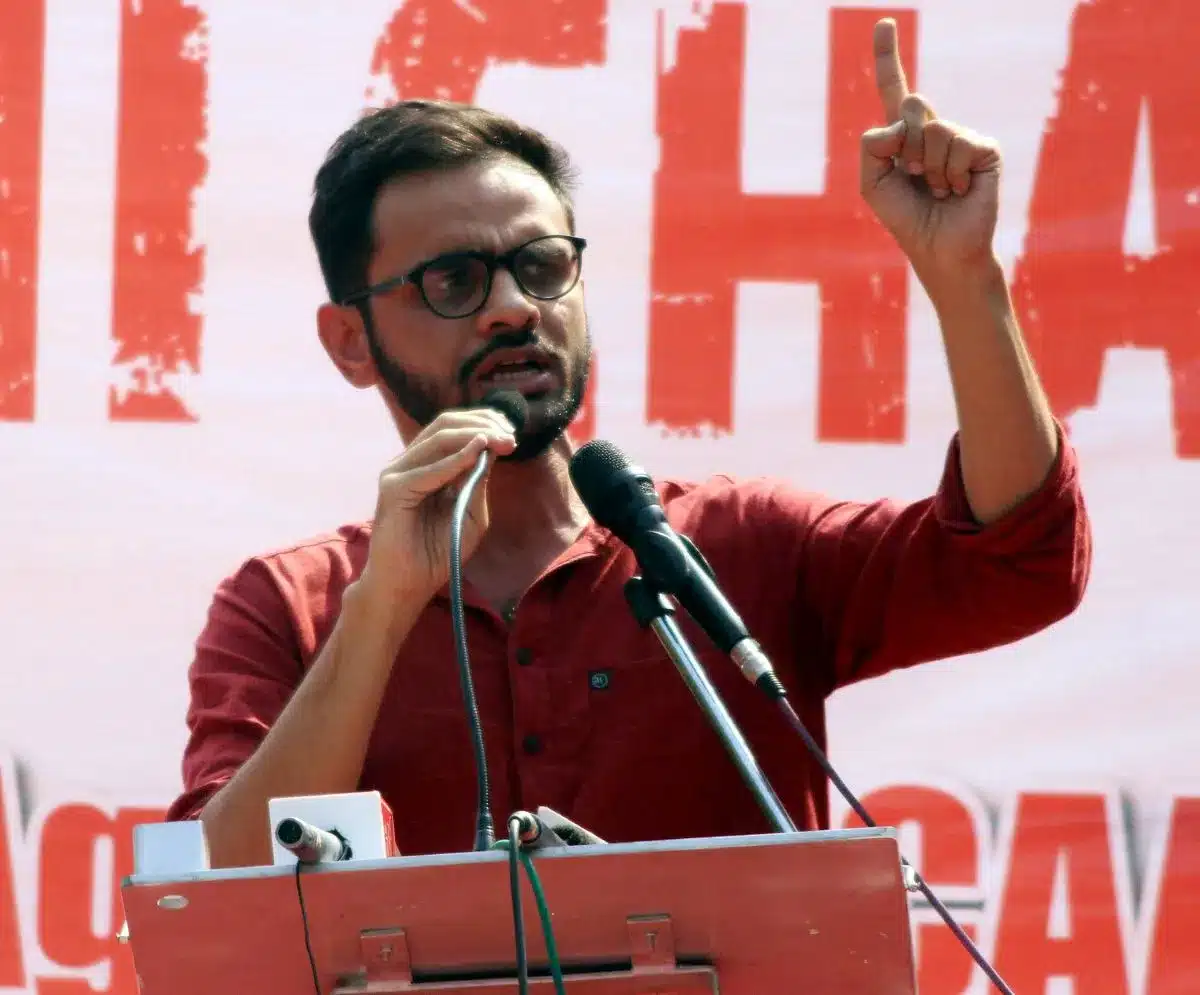
The Supreme Court of India has raised concerns over its earlier decision denying bail to former JNU student leader Umar Khalid in the Delhi riots conspiracy case.
The court said the earlier ruling may not have properly followed a major 2021 judgment that allowed bail in UAPA cases when there is a long delay in trial.
The observations were made by a bench of Justice B. V. Nagarathna and Justice Ujjal Bhuyan while granting bail to another accused, Syed Iftikhar Andrabi, who had spent more than six years in jail in a UAPA case.
The judges referred to the 2021 KA Najeeb judgment, where the Supreme Court had ruled that long imprisonment without trial could be grounds for bail, even under the strict provisions of the Unlawful Activities (Prevention) Act (UAPA).
The bench said it was “difficult to accept” the approach used in the Umar Khalid case and another UAPA case because those decisions did not properly follow the earlier larger bench ruling.
Justice Bhuyan said smaller benches are required to follow decisions made by larger benches and cannot ignore or weaken them.
The court also warned that keeping people in jail for years before trial could turn pre-trial detention into punishment.
The judges stressed that the principle “bail is the rule, jail is the exception” applies even in UAPA cases.
The ruling could have an impact on several pending bail pleas in UAPA-related cases, including those connected to the 2020 Delhi riots conspiracy investigation.
Umar Khalid was arrested in September 2020 in connection with the alleged larger conspiracy behind the Delhi riots. Police accused him of making provocative speeches during anti-CAA protests and claimed he was involved in planning the violence.
Khalid has denied all allegations and said he was not in Delhi when the riots took place.
Earlier this year, the Supreme Court had denied bail to Umar Khalid and Sharjeel Imam, while granting bail to some other accused in the same case.
