
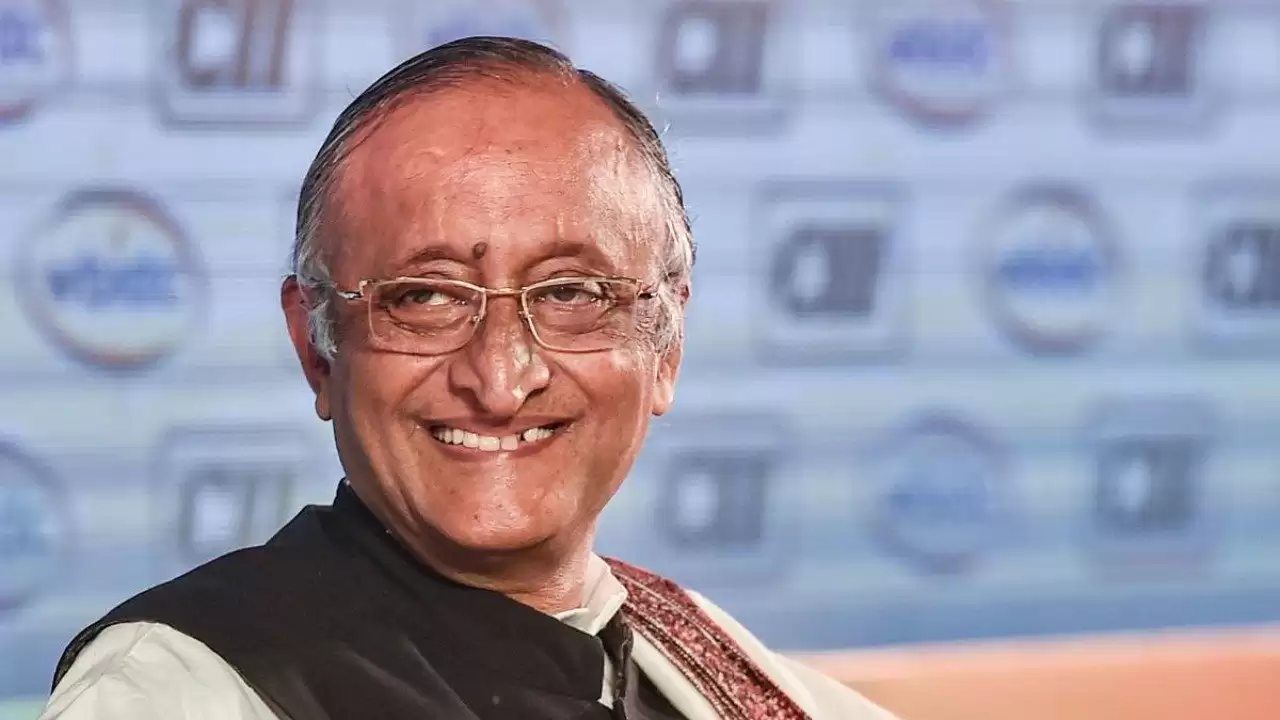
In a dramatic cabinet reshuffle on Tuesday, Mamata Banerjee nominated three-time West Bengal finance minister Amit Mitra as the chief minister’s and finance department’s main top advisor. The latter has been elevated to the rank of a cabinet minister. Banerjee was appointed when Mitra handed up the finance job to her. Notably, the former FICCI secretary-general did not run in the state assembly elections earlier this year due to bad health. If a person is not elected to the state legislature, they can serve as a minister for a maximum of six months following the elections.
Meanwhile, Chandrima Bhattacharya, a prominent TMC politician, has been appointed Minister of State (MoS) for Finance. Amit Mitra, born into a family of liberation warriors linked to Netaji Subhas Chandra Bose, has had an unblemished track record since his childhood. He earned an Economics degree from the Presidency College, which was associated with the University of Calcutta. Mitra earned a master’s degree from the University of Delhi’s Delhi School of Economics and a doctorate from Duke University in the United States in 1978.
Read also: NDMA to launch ‘Aapda Mitra’ scheme in 350 dists: Amit Shah
Mitra had established himself as a prominent economist before he was appointed West Bengal finance minister. He is recognized for turning the FICCI into a professional organization that researches and formulates India’s policies throughout its economic liberalization during his tenure.
From March 25, 2003, until March 24, 2006, he was an additional director of the Steel Authority of India Ltd. In 2008, Amit Mitra was also awarded the Padma Shri. Mitra led a team to draught business strategies for railway public-private partnership projects at the behest of then-railway minister Mamata Banerjee. He has also served on the government’s World Trade Organization advisory council and the National Manufacturing Competitiveness Council. He was a member of the expert panel on equitable development for the Planning Commission.
Mitra joined the Trinamool Congress at Mamata Banerjee’s request. He ran for the West Bengal assembly in 2011 from the Khardaha constituency, when he beat then-state finance minister and five-time MLA Asim Dasgupta by a margin of 26,154 votes, earning him the moniker “giant killer.” When he was elected to the Bengal legislature on May 18, 2011, he resigned as secretary-general of the FICCI.
On May 20, 2011, Mitra was sworn in as a state minister and given the finance and excise ministry. In addition to directing the finance department, he handled portfolios in commerce and industries, public enterprise, information technology and electronics, planning and statistics and program monitoring, micro, small and medium enterprise, and textiles.
Read also: Asian Youth Boxing: Bishwamitra strikes gold, silver for Vishvanath
Mitra was appointed head of the authorized committee of state finance ministers in 2016, which was tasked with finalizing the goods and services tax (GST) terms. Mitra was essential in making improvements and revisions to the GST following its adoption in 2017 as a member of the GST Council. He addressed letters to the Centre and Prime Minister Narendra Modi from time to time, bringing their attention to several economic concerns affecting the general public’s welfare.
He was also responsible for five years of organizing the West Bengal government’s main business conference, the Bengal Global Business Summit (BGBS), and luring investments to the state. When it comes to financial concerns, he was undoubtedly the most trustworthy member of Mamata Banerjee’s cabinet, to the point that Banerjee has maintained him in her government as her major chief advisor and for the finance department.
